You’re standing in your kitchen on a Tuesday night, half-tired, half-hungry, staring at a roll of aluminium foil that’s starting to look like a riddle. One side shiny, one side dull. You tear off a sheet, hesitate for half a second, then wrap the leftovers whichever way your hand decides. Five seconds later, you’ve already forgotten which side is facing out. The food goes into the oven or fridge, and life moves on.
We’ve all been there, that moment when you think: “Wait… does the side even matter?”
The weird thing is, most of us have a secret theory about it. Your grandmother swore the shiny side keeps heat in. Your neighbour says it’s the dull side that cooks faster. The box never really explains.
And yet, the answer is hiding in plain sight on that thin, crinkly sheet.
So, does the shiny side of aluminium foil really change how food cooks?
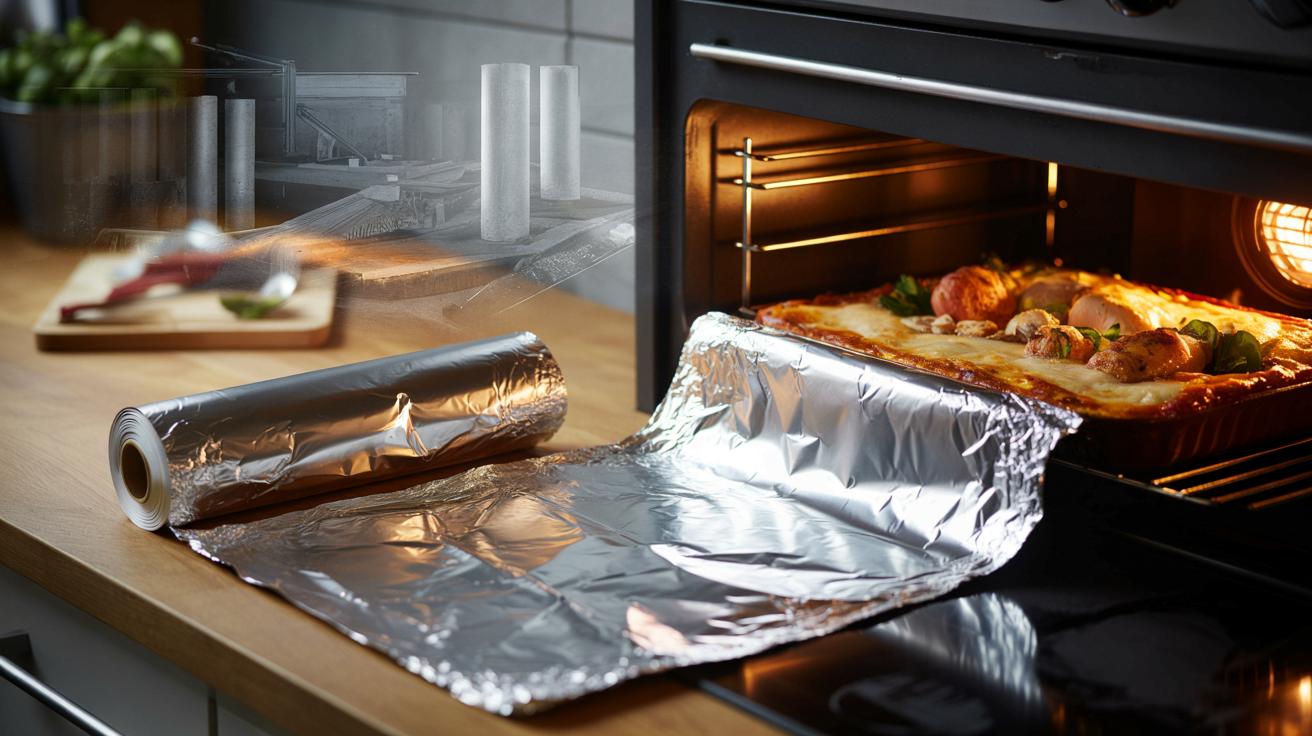
Next time you unroll a fresh sheet of foil, look closely. One side catches the light like a mirror, the other looks softly matte, almost brushed. This contrast feels deliberate, like some kind of code only “real” cooks are supposed to know. The truth is much more ordinary… and at the same time more interesting than most kitchen myths.
The shiny side and the dull side come from the way the foil is made. Not from some special coating or secret layer the brand doesn’t talk about. That small detail already flips half the urban legends.
Picture a huge factory line where aluminium is flattened between giant rollers. At the end of the process, two layers are pressed together and rolled at the same time. The sides in contact with the rollers become shiny. The two inner sides, pressed against each other, stay dull. That’s it. No magic, no chemical difference, just physics and industrial efficiency.
Brands don’t polish one side for baking and leave the other one “lazy”. They just use a rolling method that saves time and metal, and the two different finishes are the side effect. Kind of disappointing, kind of fascinating.
So from a purely material point of view, both sides are made of the same aluminium. They have the same thickness, the same melting point, the same basic behaviour in the oven or freezer. For most everyday uses, the side you choose will not burn your roast, nor ruin your potatoes.
But heat isn’t just “hot or not”. It moves by contact, by air, *and* by radiation. That last part is where things get interesting, especially when you get very close to a strong heat source like a grill or broiler. And that’s where shiny and dull finally stop being purely cosmetic.
When the shiny side actually matters (and when it really doesn’t)
If you’re cooking something under a broiler, the shiny side can reflect part of the radiant heat. Think of it like a little mirror bouncing back some of the energy. If the shiny side is facing out, it will reflect more of that direct heat than the dull side. That can slightly reduce how quickly the surface of your food browns on top.
➡️ Meteorologists confirm that the jet stream will realign unusually early this January
➡️ The must-have hot drink in January: it cleanses the pancreas and prevents fatigue
➡️ China’s new 22 km tunnel marks an engineering miracle and a controversial monument to state power
➡️ Bosch finally explains how fridge magnets affect your electricity bill
Flip it so the shiny side is inside, tight against the food, and the dull side faces the broiler: the foil absorbs and radiates a bit more heat towards the food. In real life, that difference is small, but it exists. This is where professional kitchens start to play with it.
Take roasted vegetables as a concrete example. A tray of carrots and potatoes covered with foil, dull side facing up, will trap steam and soften the veg while still letting them gently colour. If you accidentally put the shiny side up instead, will dinner be ruined? No. But under a fierce broiler, the dull side can help them catch colour a touch faster.
Now imagine a lasagna you don’t want to burn on top. Some chefs like to tent it with foil, shiny side facing out, to reflect some of the radiation and keep the cheese from turning bitter and black too quickly. Others don’t bother and watch the timing instead. Both get edible lasagna. One just uses physics as a little insurance policy.
From a thermodynamics perspective, the dull side has a slightly higher emissivity. That means it absorbs and emits more radiant heat than the shiny side. When you’re baking in the middle of the oven at 180°C, surrounded by hot air, this difference is almost negligible. The dominant factor is convection, not reflection.
Close to a grill, salamander, or barbecue flame, radiant heat becomes king. That’s when using the dull side out for faster browning or the shiny side out for a gentler effect can make sense. **Not a revolution**, but a small, clever nudge you can use when you want more control over your crusts and toppings.
The right way to use aluminium foil (and the wrong ways nobody talks about)
Think of foil as a tool with three main roles: wrapping, shielding, and shaping. For wrapping food for the fridge or freezer, the hierarchy is simple: tightness first, side second. Press the foil against the food to limit air pockets, fold the edges firmly, and avoid gaps where frost or smells can sneak in.
If you’re shielding something from intense heat, like delicate fish under a grill, that’s when you can choose shiny out to soften the attack. Want more colour on the skin of a chicken? Tent it with the dull side out toward the heat. It’s a subtle steering wheel, not an on/off switch.
A lot of us use foil in ways that quietly sabotage our own cooking. Loose tents that let all the steam escape and dry out the roast. Foil pressed so tightly on cheese that it rips the top layer off when you remove it. Foil touching very salty or acidic foods like tomatoes or lemon chicken, leaving tiny grey marks and a metallic taste.
Let’s be honest: nobody really does this every single day. We rush, we tear, we crumple, we hope for the best. But a small change helps: leave a bit of space between foil and very acidic dishes, or use a layer of parchment under the foil when something sits for hours. Your mouth will notice the difference, even if your eyes don’t.
There’s also the oven myth: that lining every surface with foil makes cleaning easier with no downside. It does help with crumbs and fat, yes, but blocking the entire bottom of the oven can mess with air circulation and temperature, and in some models even damage the appliance. Foil is handy, not magic armour.
“Foil should protect your food, not fight your equipment,” explains one Parisian chef who admits he once melted half a roll on the base of a too-hot oven.
- Use foil shiny side out when you want to slightly reflect strong top heat (broiler, grill, salamander).
- Use foil dull side out when you’re chasing a bit more browning or quicker crust under radiant heat.
- For storing food, focus on tight wrapping and avoid direct contact with very acidic or salty items.
- Pair foil with parchment when baking sticky, cheesy, or long-marinated dishes.
- Never fully cover the floor of your oven with foil; use a tray or partial lining instead.
Beyond shiny vs dull: what aluminium foil says about the way we cook
Once you know the story behind aluminium foil’s two faces, it’s hard not to look at that roll differently. This everyday object turns out to be a small lesson in how heat really moves, and how industrial design quietly shapes our kitchens. You stop blaming the shiny side for burnt edges and start thinking about distance, time, and where the heat is actually coming from.
In a way, the obsession with “which side goes out” hides the more interesting questions: Are we cooking too close to the grill? Are we covering food for too long? Are we relying on foil to fix what could be solved by simply lowering the rack or giving dinner five more minutes?
The next time someone swears there’s only one “correct” way to use foil, you’ll know the plain truth: **for most cooking and storage, the side doesn’t change your life**. The difference only really appears in those intense, radiant-heat situations where you’re chasing precise browning. That knowledge gives you a quiet kind of freedom.
You can choose your side on purpose, or not at all. You can save your attention for the smell from the oven, the colour of the crust, the way your guests fall silent for a second when they take the first bite. And maybe that’s the real job of this shiny-dull riddle: to pull us back, for a moment, into the art behind our automatic gestures.
| Key point | Detail | Value for the reader |
|---|---|---|
| Origin of shiny vs dull | Result of the rolling process, not a special coating or chemical difference | Clears up myths and stops unnecessary worry about “wrong” side |
| When the side matters | Dull side absorbs and emits slightly more radiant heat, noticeable mainly under strong top heat | Helps fine‑tune browning under broilers, grills, and salamanders |
| Better daily use | Prioritize tight wrapping, avoid full-oven lining, protect against acid and salt with parchment | Improves food quality, preserves equipment, and avoids off-flavours |
FAQ:
- Does the shiny side of aluminium foil cook food faster?Not in any dramatic way. For standard baking or roasting, both sides behave almost the same. Only under very strong radiant heat does the dull side absorb and emit a bit more energy, which can slightly boost browning.
- Which side should face the food?You can safely put either side against the food. For grilling or broiling, some cooks like dull side out for more browning, shiny side out for gentler protection, but it’s a subtle difference.
- Is one side safer or more “food‑grade” than the other?No. Both sides are the same aluminium. They come from the same sheet and go through the same process. The finish doesn’t change the safety of the material.
- Can aluminium foil touch acidic foods like tomato sauce?It can, but for long contact or storage, acid and salt can react with aluminium, leaving marks and a metallic taste. For those dishes, use a glass or ceramic dish, or add a layer of parchment between the food and the foil.
- Is it okay to line the bottom of my oven with foil?Covering the entire floor is risky. It can block airflow, distort heat, and in some ovens damage the interior. Use a removable tray or partial foil lining on a rack instead, so the air can still circulate.